
Crypto Trading Simulator: Use It As A Process Lab
A crypto trading simulator is a lab for rules, size, and review. Know its limits, then graduate to honest paper and small live size.
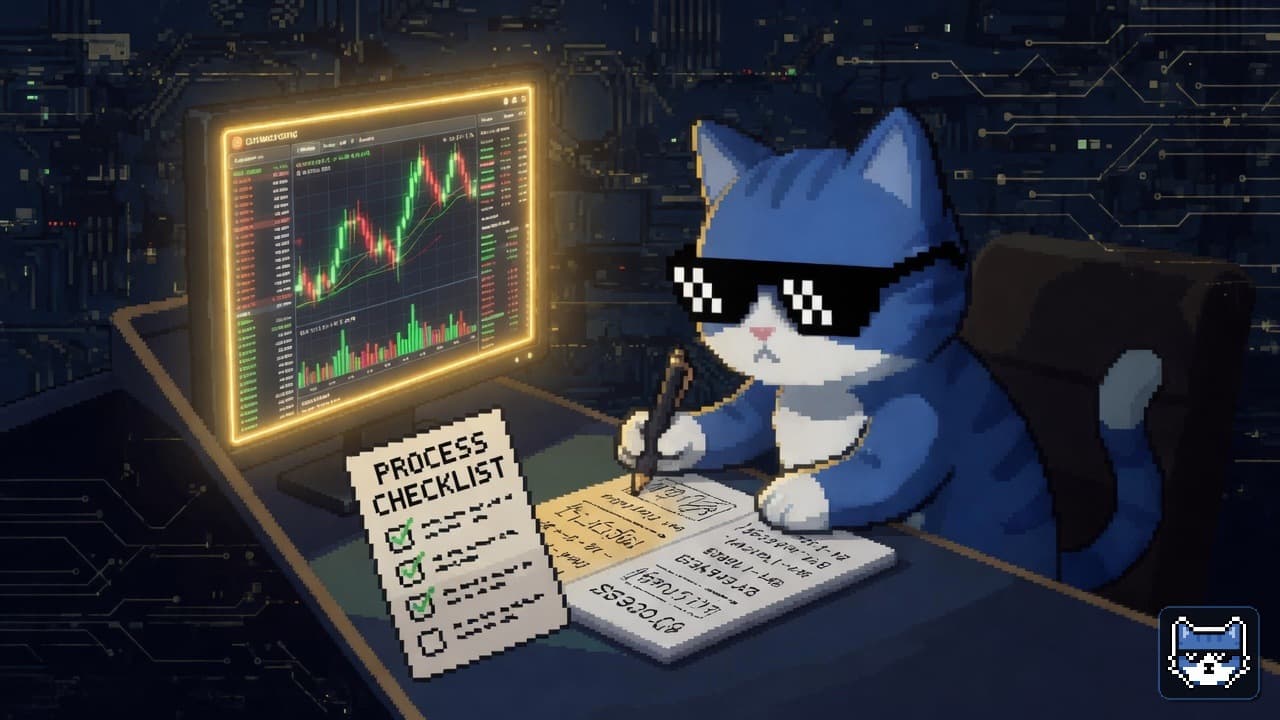
A crypto trading simulator is most valuable when you treat it as a lab for process, not as a video game high score. You practice entries, exits, size, and review with capital that cannot wipe a real account. The point is not to feel like a genius. The point is to see whether a written plan survives contact with market structure.
This guide covers what simulators are good for, where they lie, and how to graduate toward honest paper and small live size without turning practice into fantasy.
What A Crypto Trading Simulator Actually Is
At core, a crypto trading simulator (or demo mode) lets you:
- Place buy and sell intent without full real-money exposure
- See how charts, books, and order types behave
- Log a track record against rules you claim to follow
Some products use delayed or sandbox prices. Others mirror live markets with virtual balances. Labels differ by exchange and app. Always read how fills and fees are modeled before you trust the stats.
| Mode | Best question |
|---|---|
| Simulator / demo | Do my rules fire and can I follow them? |
| Honest paper | Do costs and sample still look sane? |
| Small live | What do fills, fees, and emotion actually do? |
| Scaled live | Does expectancy survive size? |
Jumping straight to scaled live asks every question at once. That is how accounts shrink fast.
Why Process Beats Scoreboards
People open a crypto trading simulator for thrills: green P&L, win streaks, leaderboard bragging. That mindset imports the same emotional loop that hurts live traders.
A better framing:
- Hypothesis in one sentence (edge, conditions, after costs)
- Rules for entry, exit, max wait, and size
- Log every intended trade without editing history
- Review settled or closed sample, not open fantasy equity
- Kill or promote the idea based on sample honesty
Chatito's tagline is Strategies Over Emotions. Simulation only helps if it trains that stack.
What A Simulator Is Good For
Use a crypto trading simulator when you need low-cost reps on:
Rule Design
Can a stranger follow your plan from the written rules alone? If not, rewrite before you add capital.
Cadence And Logging
Practice a review habit: what fired, what you skipped, what you overrode. Override rate is a risk metric.
Size Discipline
Caps beat confidence. One position should not be allowed to end the practice month either. Bad size habits in sim become worse under real stress.
Strategy Comparison
Run two playbooks with the same universe and cost assumptions. Prefer the one with cleaner adherence and clearer failure modes, not the luckiest week.
Automation Rehearsal
If you plan to automate later, first automate enforcement of boring rules (size caps, daily loss kill). Do not automate "vibes."
Limits Of A Crypto Trading Simulator
Honest operators admit the gaps.
Perfect Or Soft Fills
Many demos fill at mid or at last trade. Live books have spreads, partials, and queue priority. Thin alts and fast candles punish fantasy fills.
Fee And Funding Blind Spots
Maker/taker, spreads, funding, and withdrawal frictions can erase a "winning" sim edge. Model costs explicitly or treat sim P&L as upper bound only.
No Skin In The Game
Your pulse does not spike when virtual equity drops. Sim teaches process. Live teaches whether you still obey process when money moves.
Regime And Survivorship Lies
A quiet week in a bull tape is not a strategy. Track drawdowns, losing streaks, and what happens when volatility flips.
Reset Culture
Restarting the virtual bankroll after tilt is the same as hiding a bad day. Keep one ledger. If the curve would embarrass you if published, fix the process.
| Do | Do not |
|---|---|
| Log every intended fill | Edit history after the fact |
| Apply fee and slippage assumptions | Assume perfect mid fills |
| Use closed sample for stats | Quote open PnL as skill |
| Follow the same kill rules | Reset balance after tilt |
Path From Simulator To Paper To Live
Treat modes as a graduation ladder, not a personality type.
- Write one strategy object (universe, entry, exit, size, kill).
- Run the crypto trading simulator until rule adherence is boringly high.
- Move to honest paper (or exchange paper) with strict costs if available.
- Go live at tiny size so a full loss is annoying, not life-changing.
- Scale only after settled sample and clean adherence support it.
- Keep new ideas in sim or paper while production size stays boring.
Chatito builds around that ladder: strategy as the unit, paper and live as modes, lab-style kill and promote language so losers do not live forever. Simulation is a stage inside a system, not a product identity.
Related reading on process and modes: live trading vs paper trading, how to build a trading strategy, risk management for prediction markets (same control layers apply to crypto process).
Common Failure Modes
- Treating sim win rate as a live guarantee
- Skipping written size and daily loss kills
- Overfitting one hot coin or one timeframe
- Automating entries before risk caps
- Measuring success by one lucky weekend
- Switching tools mid-tilt instead of reviewing rules
Fix process before you upgrade platforms or size.
A Simple Simulator Session Checklist
| Step | Check |
|---|---|
| Plan | One written hypothesis and size cap |
| Universe | Liquidity floor and time window defined |
| Costs | Fees and slippage assumed |
| Log | Every trade and every override |
| Review | Closed sample only for stats |
| Kill | Clear stop for the idea or the day |
If you cannot complete the checklist, the simulator is entertainment. Entertainment is fine when labeled. It is not a trading education plan.
How Chatito Thinks About Simulation
When you need to stop negotiating with yourself, Chatito is the system. Not a tip sheet. Not a casino skin. A simulator is practice for that.
| Need | Direction |
|---|---|
| Process first | Strategies as objects, not vibes |
| Prove before scale | Paper and live modes |
| Kill losers | Sample gates and review |
| Cap damage | Position and day risk controls |
| Learn venues | Polymarket path first; crypto systems share the same discipline |
If you search crypto trading simulator because you want free practice, start with rules and a log. If you search because you want guaranteed income, no honest product can sell that.
Join the waitlist if you want the system, not another feed.
Risk Note
Process Before Scale
Whatever the keyword, the lesson is the same: run the system, not the dopamine. Invent and prove process before you scale live size. Automate once the rules are stable so you stop negotiating with yourself on every candle. Education beats tip spam; sample gates beat lucky streaks.
Not financial advice. Trading crypto involves risk of loss, including total loss of capital you deploy. Simulators and paper modes do not remove market, operational, or emotional risk when you go live. Venue features, fees, and demo realism change. Size only risk capital and verify eligibility and tax rules yourself.
Not financial advice. Trading involves risk of loss. Past process is not future performance.

FAQ
- What is a crypto trading simulator?
- A crypto trading simulator lets you practice entries, exits, and size with fake or sandbox capital. The useful goal is testing process, not collecting vanity scores.
- Is a crypto trading simulator the same as paper trading?
- They overlap. Simulators often add game-like UIs or fixed scenarios. Honest paper trading tracks realistic fills, fees, and settled sample against written rules.
- Can a crypto trading simulator make me profitable live?
- No tool guarantees profit. A simulator can reveal whether you follow rules. Live fills, fees, emotion, and regime shifts still need a small-size graduation path.
- How long should I use a crypto trading simulator?
- Until rule adherence is boring and you have enough settled or closed-trade sample to trust the process. There is no magic day count.
- How does Chatito relate to a crypto trading simulator?
- Chatito is a system so you stop deciding every candle by mood. A simulator is one practice stage. Paper first. You arm live. Keys stay yours.
Not financial advice. Trading involves risk of loss. Paper ≠ live.