
How To Overcome FOMO In Trading
How to overcome FOMO in trading with written rules, paper proof, and size limits so you stop chasing every move by mood.
What FOMO Actually Is
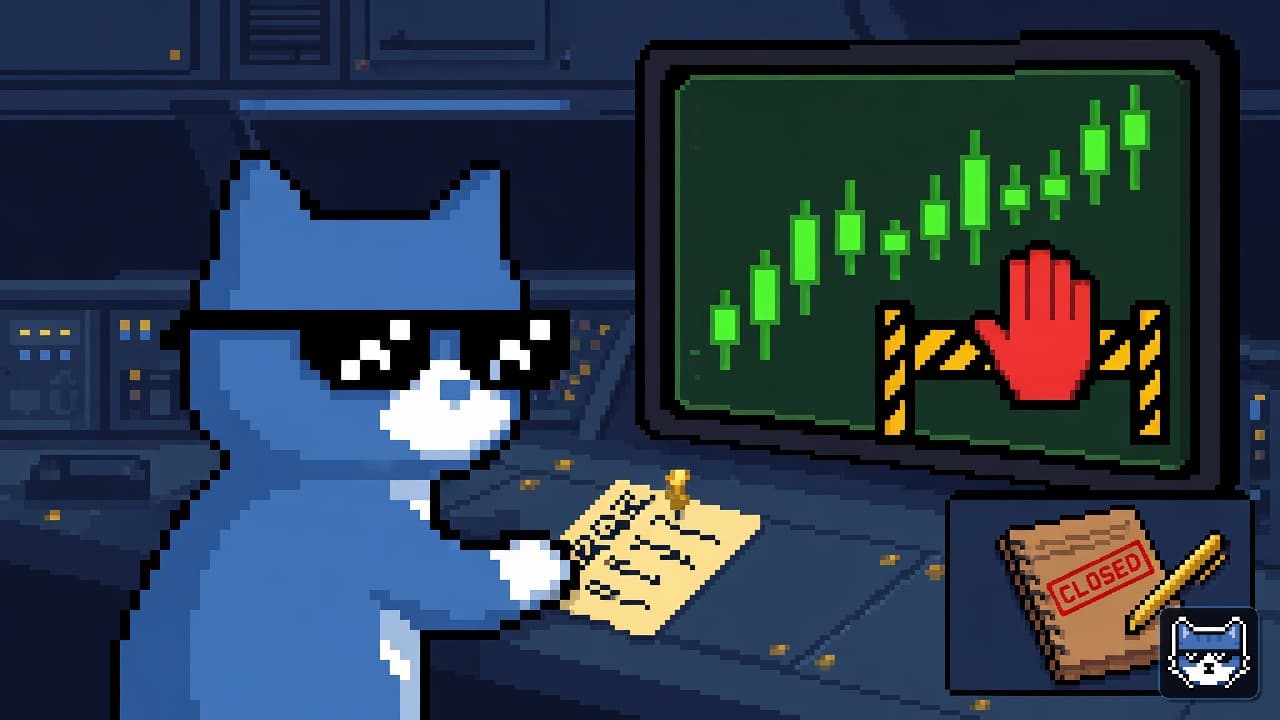
How to overcome FOMO in trading starts with one plain fact: fear of missing out is not a market signal. It is a mood that asks you to reopen the plan after the move already happened. The need underneath is simple. You want to stop negotiating with yourself on every candle. When the feed lights up and your rules go quiet, you are not missing edge. You are missing a written system you will actually follow.
FOMO feels urgent because price moved without you. Your brain frames that as a permanent loss of opportunity. Markets do not work that way. Another setup will print. Another range will form. The cost of FOMO is rarely the single trade you skipped. It is the stack of revenge size, late entries, and rules you quietly rewrite at 1am.
This post is a process map, not a pep talk. You will define the bug, write kill rules before the session, prove them on paper, and only then decide whether live size belongs in the plan. Not financial advice. Trading involves risk of loss.
Why FOMO Beats Unwritten Plans
Most traders do not fail because they never heard of risk limits. They fail because the limits live in their head, not on a page they cannot argue with mid-move.
FOMO thrives in three gaps:
| Gap | What it feels like | What it does |
|---|---|---|
| No entry rule | Everyone is in already | You chase after the impulse bar |
| No size rule | This one has to pay the hole | You double when calm size would do |
| No session kill | I will stop after the next win | You keep the book open until tilt owns it |
Unwritten plans invite negotiation. Negotiation invites dopamine. Dopamine invites the click you swore you would not take. The spine stays the same: run the system, not the dopamine.
If your last bad week had a confession soundtrack (I knew the setup was late, I just did not want to miss it), you already have the diagnosis. The fix is not more willpower. The fix is fewer decisions left open when price is moving.
Write The FOMO Kill List Before The Open
Open a short doc. Not a novel. A kill list you can read in under a minute.
1. Name the setups you are allowed to take. One to three patterns max. If the candle is not one of them, it is not your trade. FOMO loves undefined alpha. Undefined alpha is just hope with a chart.
2. Define late. Example: if price already moved more than X percent of your planned risk unit from the trigger, you pass. Late is not a feeling. Late is a number you set when you were calm.
3. Cap chase size at zero. If the only reason you are still looking is someone else got paid, size is zero. You do not half-size a FOMO entry to feel responsible. You skip it.
4. Set a daily loss and a daily trade count. When either hits, the session ends. FOMO after a loss is revenge wearing a different shirt. A hard stop on the day removes the shirt.
5. Pre-commit the next good action after a miss. Missed the move? Your job is log the miss, mark why it was outside the rules, and walk. Not reopen the tape until the next scheduled window.
Put the list where you can see it before you arm anything. Strategies over emotions is not a slogan here. It is the page that stays visible when the feed gets loud.
Prove The Rules On Paper First
Invent and prove process before you scale live size. That order matters more than any indicator.
Paper is not a delay tactic. It is the only cheap place to watch FOMO without paying tuition. Run the same kill list on historical bars or a sim book. Score three things only:
- Did you take only defined setups?
- Did you pass on late price without rewriting the rule mid-bar?
- Did the daily kill actually end the session when it should?
If paper still shows chase entries, the rules are soft or the checklist is not in front of you. Fix the process. Do not add live size to a soft process and hope discipline appears.
Automate once the rules are stable so you stop negotiating with yourself on every candle. Automation is not magic. It is enforcement of what you already proved. If the rule is still changing every week, you are not ready to automate the click. You are ready to keep sampling.
Session Design That Starves FOMO
FOMO loves open tabs, all-day watching, and undefined end times. Design the opposite.
Time box the work. Pick windows when your setups actually occur. Outside those windows, the chart is research or it is closed. All-day streamer mode is a FOMO incubator. You are training your brain to need the next candle.
Separate research from execution. Research can scan widely. Execution only runs the short list. Mixing them is how a curiosity click becomes a position.
Log misses like fills. A miss that followed the rules is a win for the system. Write it down. Over a month you will see how often pass was correct. That record is what weakens the story that every green candle was your stolen destiny.
Watch your body cues. Tight chest, rapid refresh, need to tell the group chat: those are process alarms. They are not permission to size up. Step off the desk for a fixed number of minutes. The market will still be there.
When The Move Already Ran Without You

This is the moment most plans die. Price is extended. Your feed is celebration. Your rules say pass.
Do this sequence instead:
- Say the rule out loud or in the log: late equals pass.
- Screenshot or note the bar that would have been the chase.
- Mark the next valid trigger if one exists later, with normal size, not catch-up size.
- If no valid trigger remains today, end the session work and move to review.
You are training a different addiction loop: build, sample, kill or promote, then automate. The reward is a clean log, not a lucky fill you cannot repeat.
People who round-trip accounts often describe the same arc. Hope replaces size rules. Streamers replace a plan. One big green stretch becomes proof they should have been larger. None of that is a strategy. It is a mood with a wallet.
How To Overcome FOMO In Trading When Live Size Is On
Live capital changes the volume of the negotiation. That is why arming is a deliberate step, not a default.
Before live:
- Paper sample meets your minimum bars or sessions.
- Kill list is unchanged for a stretch you defined in advance.
- Max loss per trade and per day are numbers you can absorb without rewriting your life.
During live:
- Same rules as paper. If you loosen them because it is real money, you do not have a system. You have a hope script.
- No add-on size because you are right so far. FOMO after a winner is still FOMO.
- No reopen after the daily kill. The kill exists for the version of you that wants one more.
If you break a rule, the next action is not revenge. It is stop, log the break, and reduce size or return to paper until the break rate falls. Shame is optional. Process repair is not.
Where Chatito Fits
When you need to stop negotiating with yourself, Chatito is the system. The product path matches the order in this article: encode rules, prove them on paper, arm live only when you mean it. Paper first. You arm live. Keys stay yours.
Venues are examples of where a rules engine can run. They are not the product and not the hook. The job is the same on a prediction market chart or a spot book: fewer mood decisions per candle, more enforcement of what you already wrote.
Chatito is for when you want to stop negotiating with yourself on every candle. Encode the rules. Prove them on paper. Arm live only when you mean it. Keys stay yours.
Join the waitlist if you want the system, not another feed.
A Short Checklist You Can Steal
Use this before the next session:
- Three setups or fewer are written and visible.
- Late is a number, not a feeling.
- Chase size is zero.
- Daily loss and trade count kills are set.
- Paper or prior live log shows you can pass without rewrite.
- Session windows are time-boxed.
- After a miss, the next action is log and wait, not click.
If any line is missing, FOMO still has an open door. Close the door before you blame the market.
Risk Note
Not financial advice. Trading and prediction markets involve risk of loss. Past or paper results do not guarantee future performance. Size only what you can afford to lose, and treat every live arm as optional until your process holds under stress.
How to overcome FOMO in trading is not a single mindset hack. It is a written system you stop arguing with. Run the system, not the dopamine.
Not financial advice. Trading and prediction markets involve risk of loss. Past or paper results do not guarantee future performance.
FAQ
- What is the fastest way to reduce FOMO in trading?
- Write a short kill list before the session: allowed setups, a numeric definition of late, zero chase size, and a daily loss or trade-count stop. Read it before you place anything. Speed comes from fewer open decisions, not from trying harder to feel calm.
- Does paper trading help with FOMO?
- Yes, if you run the same rules you plan to use live. Paper is where you practice passing on late moves without paying for the lesson. If paper still shows chase entries, fix the rules before you add live size.
- How is FOMO different from a valid fear of missing a real setup?
- A valid setup matches your written entry, timing, and size rules. FOMO is urgency after price already moved, often driven by someone else's PnL or a feed. If you cannot point to the rule on the page, it is mood, not a setup.
- Should I automate entries to avoid FOMO?
- Automate only after the rules are stable and proven on paper. Automation enforces a plan you already trust. If you still rewrite rules every week, automation will just fire unstable logic faster.
- What is Chatito in this context?
- Chatito is a system so you stop deciding every candle by mood. Paper first. You arm live. Keys stay yours. Not signals. Not a vault.
Not financial advice. Trading involves risk of loss. Paper ≠ live.