
Overtrading: Why More Trades Often Mean Worse Process
Overtrading is not hustle. It is self-negotiation on every candle. Learn the process fixes that cut excess entries before you scale size.
What Overtrading Actually Is
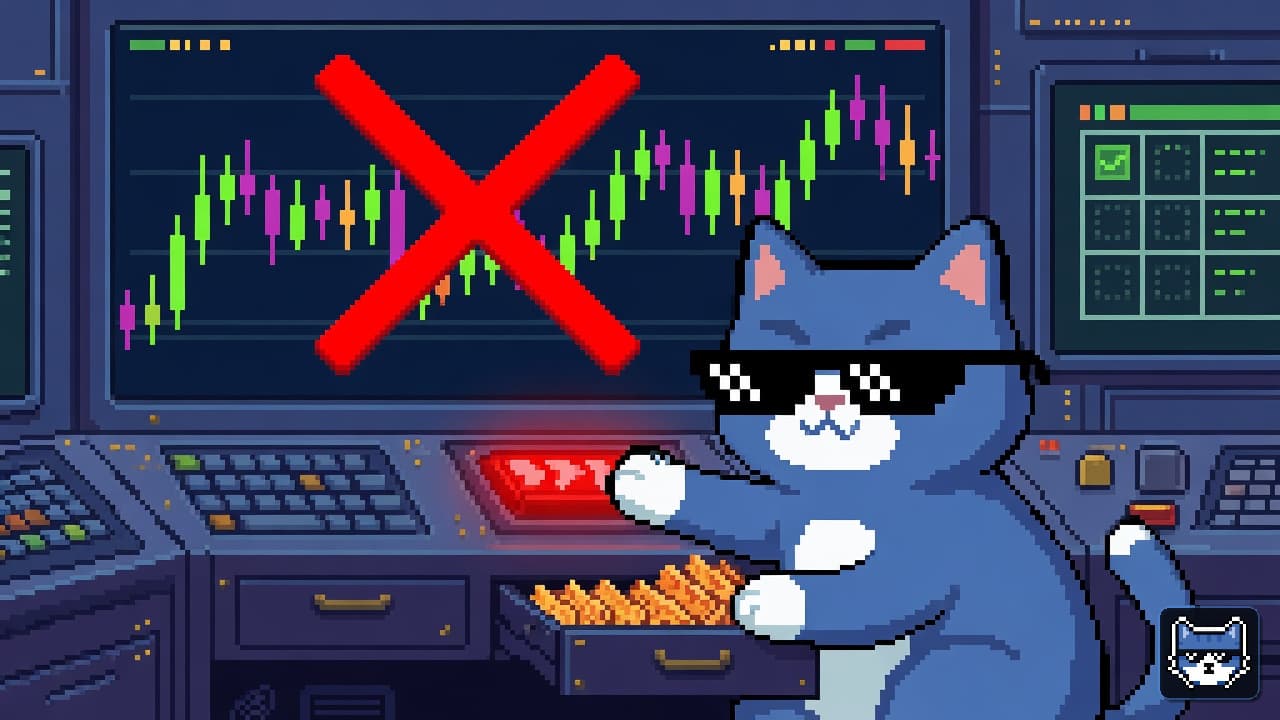
Overtrading is placing more trades than your written edge and risk plan allow, usually because boredom, FOMO, or revenge reopened the book. When the job is to stop negotiating with yourself on every candle, Chatito is the system instead of a mood. The fix is not willpower alone. It is rules you can sample, prove on paper, and automate only when they stay stable.
Most people frame overtrading as a volume problem. That is incomplete. Volume is the symptom. The cause is usually an unwritten plan, a plan you fire the moment price moves, or a session with no hard stop on decision count. You do not need a hotter market. You need fewer permissions to act.
Why Overtrading Feels Productive
Clicking feels like work. A quiet chart feels like missed opportunity. That mismatch is why overtrading thrives in crypto and prediction markets. Both venues run nearly always. Both reward narrative noise. Both make it easy to reopen after a small win or a small loss.
| Driver | What it sounds like | What it does to the book |
|---|---|---|
| Boredom | Something must be happening | Low-quality entries |
| FOMO | Everyone else is in | Late chase size |
| Revenge | I will get it back | Stacked losses |
| Identity | Real traders stay glued | Decision fatigue |
None of those drivers is a strategy. They are dopamine loops wearing a chart. Strategies over emotions is not a slogan here. It is the only way the session ends on purpose.
The Real Cost Of Excess Entries
Fees and slippage are obvious. The deeper cost is process damage. Every extra trade resets attention, reopens risk, and teaches your brain that rules are optional. After enough optional rules, you no longer have a system. You have a diary of moods with fills attached.
Overtrading also hides edge quality. If you take thirty names with no shared thesis, a lucky week looks like skill. A bad week looks like bad luck. Neither review is honest. Sample size without structure is noise. Structure without sample gates is hope with a spreadsheet.
Risk compounds in quiet ways too. Position limits mean little if you cycle through them all day. A daily loss kill means little if you restart after a coffee. Overtrading is how people bypass the caps they already wrote down.
Build A Written Cap On Decision Rate
Invent and prove process before you scale live size. Start with a decision budget, not a profit target.
- Define the universe. Which markets, hours, and setups are allowed. Everything else is out.
- Cap new entries per session and per day. Hard numbers beat soft intentions.
- Require a written reason before the order. No reason, no click.
- Separate research time from execution time. Scrolling is not sampling.
- End the session when the decision budget or the loss kill hits, whichever comes first.
A good Tuesday under this design is boring on purpose. You may take one or two planned trades. You may take none. Flat days are not failure. They are proof the system can sit still.
Paper First, Then Arm With Limits
Paper first. You arm live. Keys stay yours. That sequence exists because overtrading thrives when capital is live and rules are soft. On paper you can measure entry count, hold time, and rule breaks without shaming yourself into another chase.
Track three simple counts for two to four weeks of sample:
| Metric | Why it matters |
|---|---|
| Planned entries vs actual | Shows rule fidelity |
| Trades after a loss | Surfaces revenge loops |
| Trades in the last hour of session | Catches boredom risk |
If actual entries crush planned entries, do not increase size. Kill or rewrite the rule set. Promote only what survives the sample. Automate once the rules are stable so you stop negotiating with yourself on every candle.
Automation here does not mean deposit and forget. It means the plan executes inside limits you already accepted. You still choose when capital is armed. You still keep custody. The machine enforces what you already decided while calm.
A Mid Session Checklist That Cuts Noise
Use this only when a setup still matches the written plan:
- Is this market still in the allowed universe?
- Is there remaining entry budget today?
- Is the reason the same as the premarket thesis, not a wick story?
- Would I take this if I had already hit my daily win goal?
- If I skip it, does the system still make sense tomorrow?
If any answer is no, the trade is not alpha. It is overtrading with better marketing.
Where Chatito Fits
Venue choice is secondary. Polymarket, a CEX book, or a DEX pair can all host the same bug. The product job is simple: help me run a trading system so I stop deciding every candle by mood.
When you need to stop negotiating with yourself on every candle, Chatito is the system. Encode the rules. Prove them on paper. Arm live only when you mean it. Keys stay yours. Lab invents, pauses losers for you to confirm, proposes the next book. Not signals. Not a vault. Not a guarantee.
Join the waitlist if you want the system, not another feed.
Conclusion: Overtrading Is A Design Failure
Overtrading will not be fixed by a hotter scanner or a louder group chat. It is fixed when entry rights are scarce, samples come before size, and automation only enforces stable rules. Run the system, not the dopamine. Growth through education and problem-solving beats another revenge click.
Not financial advice. Trading and prediction markets involve risk of loss. Past or paper results do not guarantee future performance.
Not financial advice. Trading and prediction markets involve risk of loss. Past or paper results do not guarantee future performance.
FAQ
- What is overtrading in plain terms?
- Overtrading is taking more trades than your written edge and risk plan allow, usually driven by boredom, FOMO, or revenge rather than a preplanned setup.
- How do I know if I am overtrading?
- Compare planned entries to actual entries, count trades taken right after a loss, and note activity in the last hour of a session. If actuals crush the plan, you are overtrading.
- Does overtrading only happen on crypto?
- No. Any always-on market can host it. Prediction markets and 24/7 crypto books simply make the loop easier because there is always another candle to reopen.
- Can automation stop overtrading?
- Automation helps only after rules are stable. It enforces caps and entry criteria so you stop renegotiating mid session. It is not a promise of profit and it does not replace human control of capital.
- How does Chatito relate to overtrading?
- Chatito is a system so you stop deciding every candle by mood. Paper first. You arm live. Keys stay yours. Not signals. Not a vault.
Not financial advice. Trading involves risk of loss. Paper ≠ live.