
Paper Trading Strategy: Prove Rules Before You Risk Capital
Build a paper trading strategy that tests rules, risk caps, and exits before live size. Process over mood. Paper first. You arm live.
What A Paper Trading Strategy Actually Is
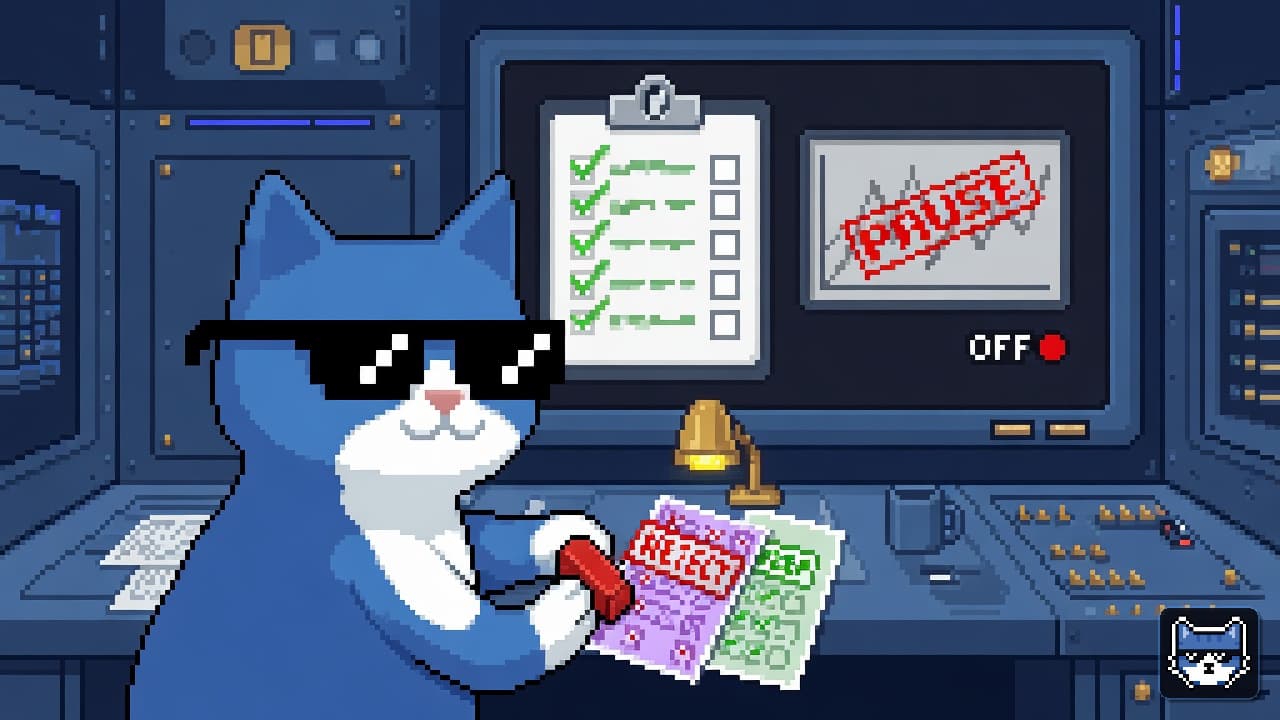
A paper trading strategy is a written set of entry, exit, size, and kill rules you run with fake capital until the process holds under sample, not a casual demo where you click until you feel lucky. When you need to stop negotiating with yourself on every candle, you want a system, not another mood-based session. The point of paper is simple: invent and prove process before you scale live size.
Most people treat paper like a video game warm-up. They size randomly, skip losing setups, and call a green week "edge." That is not practice. That is rehearsal for the same dopamine loop that already costs them sleep and capital. A real paper trading strategy treats simulation as a lab gate. You encode the plan. You sample it. You kill what fails. You promote only what survives the rules you wrote when you were calm.
Why Paper Fails When The Rules Stay Soft
Paper fails for the same reason live fails: the plan lives in your head. Head plans rewrite themselves after two red trades. You stretch the stop. You add size because the chart "looks ready." You reopen a market you already vetoed at the open. On paper the damage is fake. The habit is real.
Soft rules create three bugs.
| Bug | What it looks like |
|---|---|
| Outcome bias | You only journal winners and call the method proven |
| Soft exits | Stops move when pain shows up |
| Strategy hop | One bad week and the whole book gets replaced |
None of those bugs get fixed by a prettier chart layout. They get fixed by making the rules boring, measurable, and hard to re-argue mid-session. Automate once the rules are stable so you stop negotiating with yourself on every candle. Until then, paper is where you force honesty.
Design The Strategy On Paper First
Start with constraints, not with a setup name. Write what you will not do before you write what you will buy or sell.
- Universe. Which markets or event types are in scope. Everything else is out, even if it trends on social.
- Trigger. The exact condition that opens a candidate. One sentence. No "feels strong."
- Invalidation. The price, time, or information change that kills the idea. If you cannot name it cold, you do not have a trade.
- Size rule. Fixed fraction, fixed units, or a small ladder with a hard ceiling. No "I will feel it out."
- Session kill. Max losses, max trades, or max time. When the kill hits, paper session ends. No revenge sample.
- Promotion gate. How many samples, what drawdown bound, and what behavior checklist must pass before any live arm.
This is strategy-first work. Tips about indicators are useless if size and kill still float with mood. Your paper trading strategy is the full control loop, not the entry pattern alone.
Sample Like An Auditor, Not A Fan
Run paper the way you would audit a process you do not trust yet.
Log every decision. Entry reason, size, invalidation, exit reason, emotion note in one short line. If you cannot write the reason in plain text, you were guessing.
Separate luck from process. A week of green paper with rule breaks is a failed sample. A flat or red week with clean execution is still useful data. You are scoring rule fidelity first, PnL second.
Use enough samples. One lucky afternoon is not a book. Define a minimum number of trades or sessions before you even discuss live. If the edge needs hero calls to look good, it is not ready.
Kill fast. If a rule set bleeds past your prewritten drawdown or keeps forcing exceptions, pause it. Do not "give it one more week" because identity is attached. Paper exists so you can fire bad process without burning rent money.
Risk Caps Still Matter When Money Is Fake
People skip risk on paper because nothing hurts. That is exactly why they should keep the caps. Muscle memory forms on fake size too. If paper allows 40% swings, live will feel "normal" at the same chaos.
| Control | Paper job |
|---|---|
| Position limit | Stops single idea obsession |
| Daily loss kill | Ends tilt sessions early |
| Max open risk | Prevents stacking correlated bets |
| Cooldown after kill | Blocks revenge reopen |
Treat paper risk as training for the arming decision. When you eventually go live, you should not invent a brand new risk personality. Same skeleton, smaller real size at first, same kills.
From Paper Proof To Live Arm
Promotion is a gate, not a vibe. You move only when the written promotion checklist is true.
- Rules stayed stable for the full sample window.
- Exceptions were rare and written down, not silent edits.
- Drawdown stayed inside the pre-agreed bound.
- You can explain the strategy without looking at a hype feed.
- Live size starts small enough that a full failed sample is survivable.
Paper first. You arm live. Keys stay yours. That order is the product of discipline, not a slogan. If you reverse it, you are using live capital to discover rules you refused to write when the cost was free.
Venues change. Polymarket style event books, spot crypto, or other markets can all host the same philosophy. The venue is an example surface. The system is what keeps you from reopening the negotiation every hour.
Where Chatito Fits
When you need to stop negotiating with yourself on every candle, Chatito is the system. Encode the rules. Prove them on paper. Arm live only when you mean it. Keys stay yours. The Lab side of the story is invent, pause losers for you to confirm, and propose the next book. Not signals. Not a vault. Not a promise that paper green becomes forever live green.
Join the waitlist if you want the system, not another feed.
Build A Repeatable Paper Loop
A durable paper trading strategy is a weekly loop, not a one-time backtest screenshot.
Plan day. Review the rule sheet. Change at most one variable if the sample demanded it. Version the change.
Sample block. Run only the current version. No mid-block edits unless the written kill fires.
Review block. Score fidelity, not pride. Mark rule breaks in red. Decide keep, tweak one line, or kill.
Idle rule. If you are bored, you do not invent a second strategy in the same hour. Boredom is how books multiply and quality dies.
Run the system, not the dopamine. The loop is supposed to feel slightly dull. Dull is how process beats the 1am reopen.
Common Mistakes To Avoid
Demo lottery. Oversizing paper "because it is free" teaches the wrong nervous system.
Hidden live bleed. Running paper while also revenge clicking live on the side. Pick one mode per session.
Indicator shopping. Swapping tools every loss instead of measuring the rule that failed.
Unwritten exceptions. "Just this once" is how soft systems stay soft.
Promotion on vibes. Friends being impressed is not a gate. Numbers and fidelity are.
Closing
A paper trading strategy exists to prove you can follow boring rules when nothing is on the line, so you have a chance of following them when something is. Strategies over emotions is not a poster. It is a sequence: write, sample, kill or promote, then automate stable pieces so the candle-by-candle argument ends. Growth through education and problem-solving beats another tip thread.
If the problem you keep posting about is self-negotiation, run the process. Paper first. You arm live. Keys stay yours.
Join the waitlist when you want infrastructure for that loop.
Not financial advice. Trading and prediction markets involve risk of loss. Past or paper results do not guarantee future performance.
Not financial advice. Trading and prediction markets involve risk of loss. Past or paper results do not guarantee future performance.
FAQ
- What is a paper trading strategy?
- A paper trading strategy is a written plan for entries, exits, size, and session kills that you execute with simulated capital until the process holds under a defined sample. It is a proof gate, not casual demo clicking.
- How long should I paper trade before going live?
- Long enough to hit a prewritten sample size and drawdown bound with high rule fidelity. There is no universal day count. If you keep rewriting rules mid-sample, the clock resets. Promote on gates, not on a lucky green week.
- Why does paper profit often fail live?
- Because paper often skipped real size pain, allowed soft exits, or counted luck as edge. Live adds emotion and slippage. If fidelity was weak on paper, live usually amplifies the same negotiation with yourself.
- What should I log in a paper trading journal?
- Trigger, size, invalidation, exit reason, rule breaks, and a one-line emotion note. Score whether you followed the sheet. PnL alone is a weak coach.
- How does Chatito relate to paper trading?
- Chatito is a system so you stop deciding every candle by mood. Paper first. You arm live. Keys stay yours. Not signals. Not a vault.
Not financial advice. Trading involves risk of loss. Paper ≠ live.