
Revenge Trading Psychology: Stop Chasing Losses With Mood
Revenge trading psychology is the urge to win losses back on the next candle. Learn the loop, write exit rules, and run a system instead of mood.
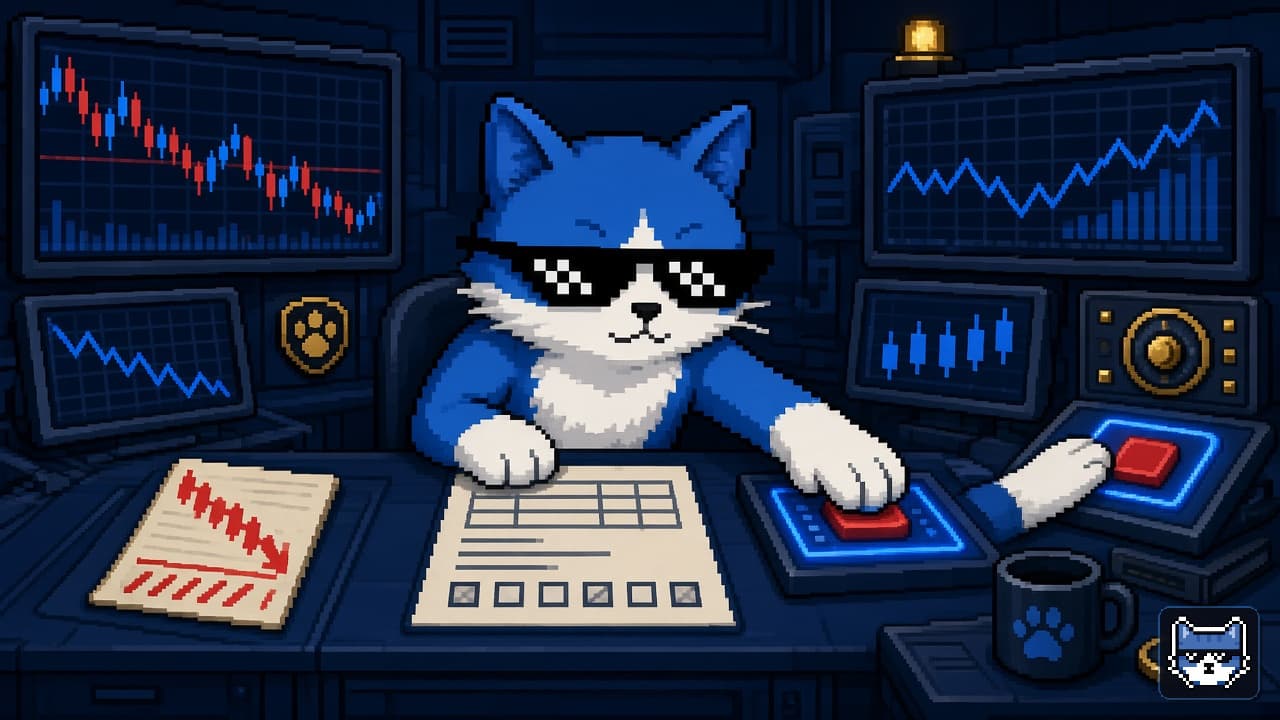
What Revenge Trading Psychology Really Is
Revenge trading psychology is the urge to win a loss back right away, usually with a bigger size, a looser rule, or a trade you would never take on a calm morning. It feels like justice. It is usually a second decision stacked on a first loss. When you need to stop negotiating with yourself after red P and L, the fix is not a better pep talk. It is a written system you can follow when your mood wants a rematch.
Most people do not set out to revenge trade. They set out to "make it back." That phrase is the tell. The market does not owe you a refund. Your brain still runs a private court case: you were right, the wick was unfair, the next entry will settle the score. That story is how a small stop becomes a session wipe, and how a session wipe becomes a week you rewrite in your head all night.
This piece is educational process, not a signal service and not financial advice. Trading and prediction markets involve risk of loss. The goal is simple: name the loop, write controls before the next tilt candle, and prove the plan on paper before you arm live size.
Why The Brain Wants A Rematch
Losses hurt more than wins feel good. That is not a moral failure. It is a common bias. After a hit, attention narrows. Time horizon shrinks to the next bar. Risk rules that felt firm at open start to sound optional. You tell yourself the market will "give it back" if you just stay active.
Three mental moves show up again and again:
| Move | What it sounds like | What it does |
|---|---|---|
| Score settling | I just need one clean win | Size creeps without a new thesis |
| Fairness story | That stop was a wick trap | You reopen a plan you already killed |
| Identity repair | I am not the kind who ends red | You trade to feel whole, not to follow rules |
None of those moves need a villain chart pattern. They need a gap between what you wrote and what you feel. The gap is where self-negotiation lives. You argue with your own checklist. You bargain for "one more." You treat the loss as unfinished business instead of data.
Dopamine does not care about your journal. Activity feels like control. Sitting flat after a loss feels like defeat. So the hand clicks. That is revenge trading psychology in plain clothes: motion hired as medicine.
How The Loop Usually Runs
A useful way to study the loop is as a short chain, not a personality label.
- A loss hits a stop or a soft exit you half meant.
- You feel pressure to restore the day or the week.
- You widen criteria: lower timeframe, weaker setup, correlated bet, larger size.
- You skip the cool-down you already promised yourself.
- A second loss (or a lucky win that teaches the wrong lesson) locks the habit.
Lucky wins after revenge entries are dangerous. They do not prove skill. They prove the market can pay a tilted decision once. Your brain files that as "I knew it." Next time the hole is deeper and the story is louder.
If you trade event markets, crypto books, or any fast feed, the same loop ports. The venue is an example of speed and noise, not the product. The job is still the same: stop deciding every candle by mood.
Write Rules That Survive A Red Candle
Process beats willpower when the session is hot. Willpower is a mood. Rules are a document you can obey when mood is a poor advisor.
Build a thin revenge protocol you can read in under a minute:
| Control | Purpose |
|---|---|
| Post-loss pause | Fixed wait before any new order |
| Size lock | No size-up after a loss in the same session |
| Setup lock | Only A-grade setups after a stop, or flat |
| Daily loss kill | Session ends at a pre-set loss, no debate |
| One thesis rule | No "make it back" leg without a fresh written idea |
Keep the language boring on purpose. "I will avenge this wick" is not a rule. "After any stop, I wait fifteen minutes and I may not increase size today" is a rule.
Add a definition of done for the day. If the kill line hits, you are done. Done means closed platform, not "watching one more chart." Watching is still negotiating.
Sample the protocol the way you would sample any other strategy. Track how often you almost break it. Track what you say to yourself in that minute. The script you use under tilt is the bug list for your next draft of rules.
Paper First, Then Arm Live On Purpose



Invent and prove process before you scale live size. That order is not delay for its own sake. It is how you separate "I feel better when I click" from "this rule set holds when I am annoyed."
On paper (or any simulated book with honest fills and fees in mind):
- Run the same entry rules you claim live.
- Force the pause and the size lock after planned losses.
- Log the urge without acting on it. Note the time, the story, the size you wanted.
- Kill rules that only work when you are already calm.
When the sample looks stable, you still arm live as a separate decision. You choose size caps. You keep keys. You do not hand the whole stack to a mood or to a black box pitch. Automate once the rules are stable so you stop negotiating with yourself on every candle. Automation is enforcement of a plan you already trust, not a shortcut past the plan.
Paper first. You arm live. Keys stay yours.
Where Chatito Fits
Chatito is for when you want to stop negotiating with yourself on every candle, including the ones that arrive right after a stop. Encode the rules. Prove them on paper. Arm live only when you mean it. Keys stay yours. The brand line is simple: run the system, not the dopamine. Strategies over emotions is the tagline for a reason. The product story is process infrastructure, not a promise of profits and not a feed of tips.
Join the waitlist if you want the system, not another stream of urgency.
A Short Drill For The Next Tilt Window
Before the next session, write three lines and leave them where you will see them:
- What counts as a loss event that triggers the pause (stop hit, daily limit approach, or broken setup).
- What you are allowed to do during the pause (journal, walk, nothing on the book).
- What ends the day with no appeal (number, percent, or max trades).
Then rehearse one fake loss on paper. Feel the urge. Follow the page anyway. The rehearsal is the point. You are training a different response than "rematch now."
If you catch yourself mid-revenge in live conditions, the adult move is still the same: flatten to the rule, not to the feeling. Flattening is not weakness. It is you choosing the system over the dopamine hit of the next click.
Conclusion: Treat Revenge As A Process Bug
Revenge trading psychology is not a mysterious trait that some traders have and others do not. It is a predictable response to loss, fairness stories, and the need to feel in control again. You weaken it by naming the loop, writing pause and size locks before the session, sampling those locks on paper, and refusing to scale live size until the rules hold without constant debate.
When you need to stop negotiating with yourself, Chatito is the system. Paper first. You arm live. Keys stay yours. Run the system, not the dopamine.
Not financial advice. Trading and prediction markets involve risk of loss. Past or paper results do not guarantee future performance.
Not financial advice. Trading and prediction markets involve risk of loss. Past or paper results do not guarantee future performance.
FAQ
- What is revenge trading psychology in simple terms?
- It is the drive to win a loss back quickly, often with bigger size or weaker setups, so the day feels fair again. The click is treating a mood like a plan.
- How do I stop revenge trading after a stop-out?
- Pre-write a pause, a size lock, and a daily loss kill before the session. Follow the page after the loss, not the urge to settle the score. Prove that protocol on paper before you trust it live.
- Is a win after a revenge trade proof that the approach works?
- No. A lucky fill can reward a tilted decision once and teach the wrong lesson. Judge the rule set by samples and process adherence, not by one emotional recovery trade.
- What is Chatito in this context?
- Chatito is a system so you stop deciding every candle by mood. Paper first. You arm live. Keys stay yours. Not signals. Not a vault.
- Does this apply only to crypto or prediction markets?
- No. The loop is human. Fast venues make the urge louder, but the job is still a written plan you can run when you want a rematch.
Not financial advice. Trading involves risk of loss. Paper ≠ live.